
#17: "Fit for war?"
Can Germany grow its army through voluntary service?

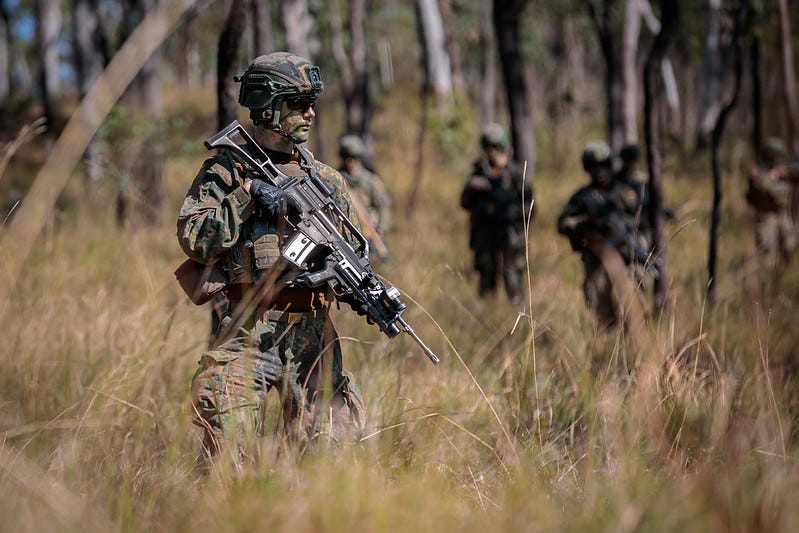
A glossy, camouflage-colored piece of mail just went out to German teens across the country. But unlike the routine pizza delivery menus or fitness studio mailers stuffed in mailboxes, this letter can’t simply be tossed into the blaue Tonne.
The German boys must scan the letter’s QR code and fill out an online questionnaire within one month. They’ll be asked questions about their health, fitness, education and willingness to serve.
“Serve in what?” these 2008-born Germans might ask, rubbing sleep from their eyes at the breakfast table as they glance back at the letter’s block-lettered headline that “democracy requires strength.”
Wake up kids, we’re getting ready for war!
Last year Germany passed a controversial military service law, aimed at turning Germany into Europe’s most powerful military and increasing its ranks by 43% over the next decade. After several years of debate and a push from Chancellor Friedrich Merz’s Christian Democrats to bring back mandatory conscription, the Bundestag settled on this compromise law that instead requires German boys to register their information with the government and, come 2027, go get a medical examination.
Looming in the background, of course, is Russia’s war of aggression in Ukraine. EU leaders watched in horror last year as the US president and vice president upbraided Zelenskyy in the Oval Office, quickly cementing the notion that Europe can no longer rely on America for military protection and thus must remilitarize.
This is Josh Axelrod, guest author of a recent Update Germany post about the country’s firework conundrum, back by popular demand (I considered each firecracker I heard on Silvester a ring of endorsement.) I used to cover military procurement at the Pentagon, so I’m here to walk you through this new law and whether Germany’s political gamble could pay off.
First, a message from our sponsor, Factofly
Trying to freelance in Germany? Read this first.
Many internationals in Berlin work on projects, but quickly run into admin, contracts, and rules that are hard to navigate. We’re building Factofly to handle the boring parts around project work — so you can focus on the work itself. Early access is open while we test this in small groups.
What’s in the law?
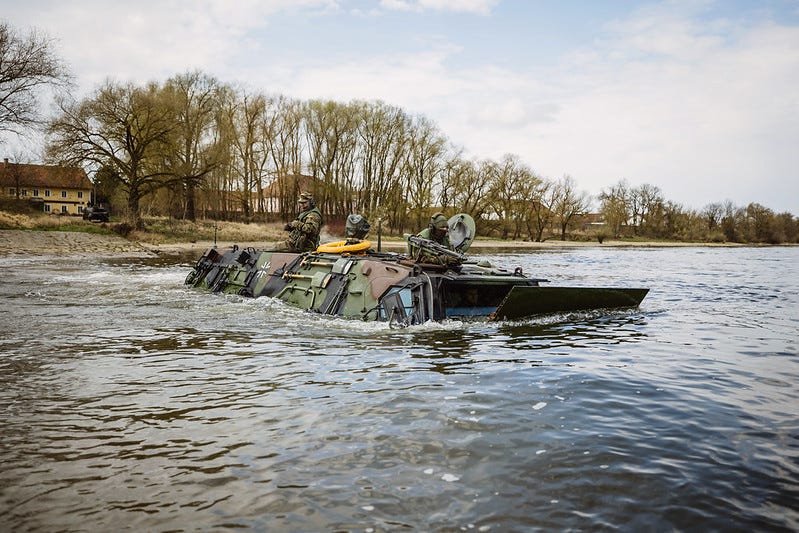
The Bundeswehr, Germany’s army, is aging and massively understaffed — currently, there are 184,200 members of the active service, and the country wants to increase that number to 260,000 by 2035 with an additional 200,000 reservists to meet NATO targets.
Therefore, proposals to modernize the army have focused on making service more appealing by dangling carrots in front of recruits.
The law will change volunteers’ status to that of temporary soldiers or Soldat auf Zeit (SaZ). That change comes with better pay and pension benefits — volunteers’ monthly pay will be about €2,600, compared to a measly €800 in France (sacre bleu!) They’ll also get their drivers license paid for after a year.
If the target number of recruits isn’t met, the government says it reserves the right to revisit the idea for needs-based conscription, though this would have to go back to the Bundestag for a vote.
As for girls, this entire process is optional.
They’ll also receive the questionnaire, but answering won’t be mandatory, nor will medical exams. That’s because women are not subject to the same rules as men under Germany’s constitution, the Grundgesetz, which specifically says: “Men who have attained the age of 18 may be required to serve in the Armed Forces, in the Federal Border Police, or in a civil defence organisation.”
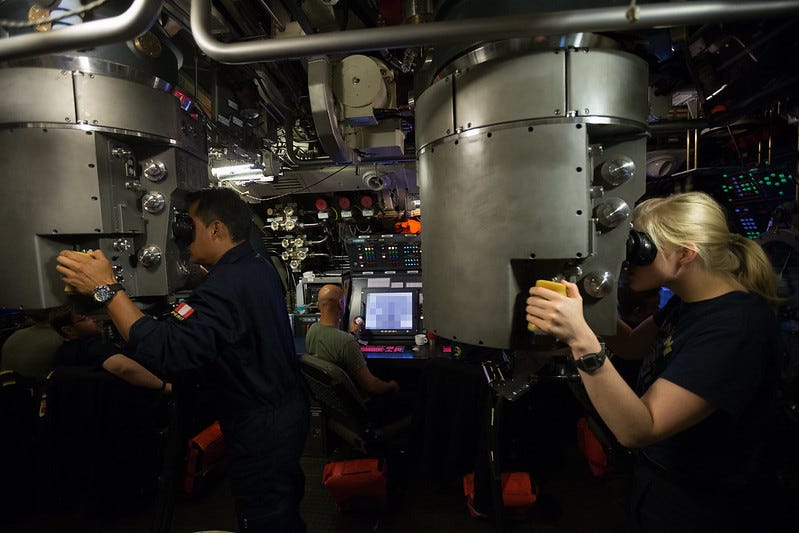
The government wants to boost the number of women in the Bundeswehr, right now just about 25,000, but instituting the same requirements would be far more difficult.
Changing the constitution requires a two-thirds majority in the Bundestag and Bundesrat, not just a simple majority. And last I checked, the Merz government has nowhere near these votes, hence the focus on male conscription.
A brief history of the German military
If you remember from history class, Germany was demilitarized after the end of World War II and divided into West and East Germany. But in the 1950s, the Western Allies pressured West Germany to chip in military responsibility because of the threat of the Soviet Union (the more things change, the more they stay the same!)
Thus, in 1955, the Bundeswehr was born and Germany joined NATO. The next year, the Compulsory Military Service Act was passed. In 2011, following the end of the Cold War, the compulsory military service was suspended, transitioning the Bundeswehr into a professional and voluntary military.
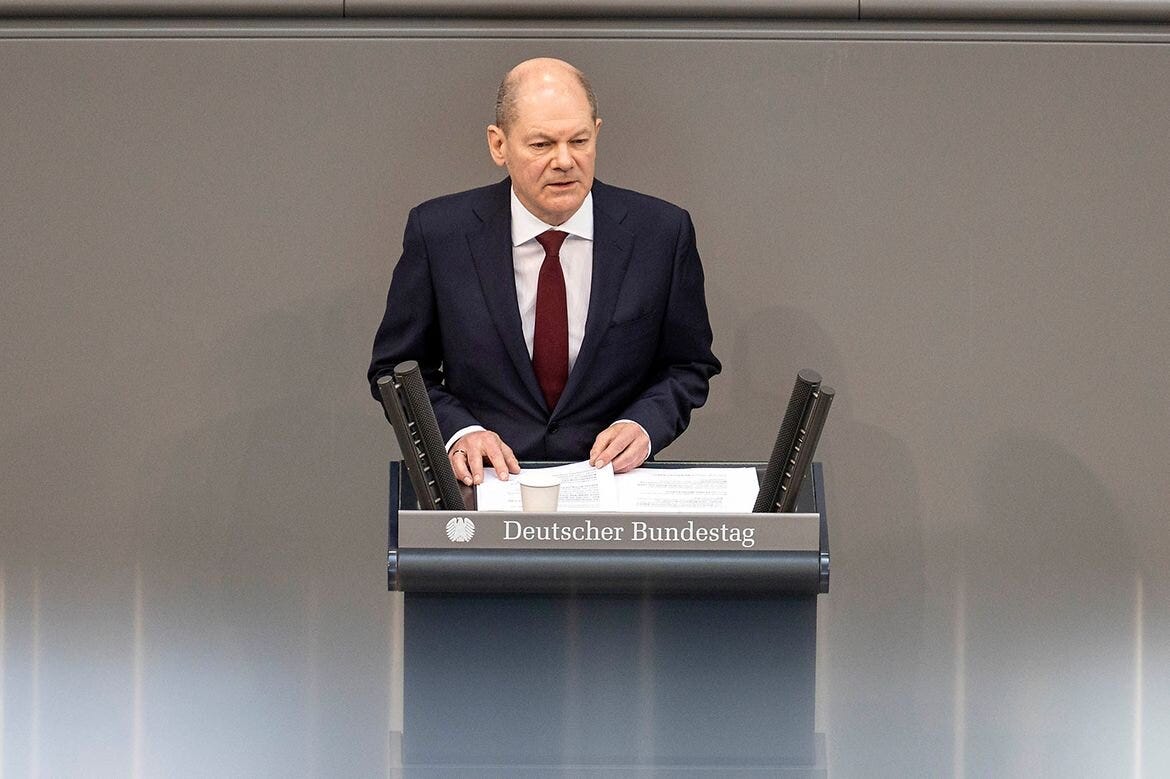
Cue Russia’s invasion of Ukraine in 2022. Lawmakers began talking about the need for expanding the Bundeswehr’s ranks soon after, with then-Chancellor Olaf Scholz (SPD) giving his famous Zeitenwende speech, about how an epochal turning point would require more military spending.
Defense Minister Boris Pistorius (SPD) told ZDF in 2023:
“We have to get used to the idea again that the danger of war could be looming in Europe. And that means: We have to become fit for war. We have to be fit for defense. And get both the Bundeswehr and society ready for this.”
That marked a huge shift in rhetoric for a country unnerved by its history of war and kicked off a two-year-long legislative process to figure out what becoming “fit for war” might exactly look like.
Throughout the process, the CDU argued that the only way to reach the Bundeswehr’s target numbers would be to bring back some form of mandatory conscription. Back in 2023, Merz said:
“We will probably not be able to manage with the current voluntary system alone, but will need additional elements of conscription. It was a mistake - as we know at the latest today - to suspend conscription”
After the compromise was hashed out this summer, he told ARD he was still skeptical, adding “I suspect it will not remain voluntary.”
Merz wasn’t the only one left dissatisfied. Die Linke strongly opposed the plan, labeling it a first step toward mandatory conscription and calling it, “Militarization through the back door.” The AfD voted against it too, though for different reasons. They want a military service incentivized by nationalist sentiment not pay raises.
Germany looks to its neighbors
Germany took close note of its NATO neighbors to the north, looking to the Nordic and Baltic states for a replicable model.
There are three forms of conscription across NATO: mandatory, lottery-based, and selective-compulsory. Finland and Estonia require all eligible males to serve, given their frontline status on the Russian border. Denmark, Latvia, and Lithuania draw lots to determine who will join. And Norway and Sweden require citizens to fill out a questionnaire and then draft a subset of eligible respondents.
A divided response
It’s that last model that Germany has chosen to emulate, making understandable complaints that the word “voluntary” in the law could easily be swapped out for “compulsory.”

When the law passed in December, thousands of students skipped school and took to the streets across 90 cities in towns in Germany. They’ll strike again in March. The group, Schulstreik gegen Wehrpflicht or school strike against conscription, laid out its rationale on its website:
“We don’t want to spend half a year of our lives locked up in barracks, trained in drill and obedience, and learning to kill. War offers no future prospects and destroys our livelihood.”
They go on to write:
“Nobody talks to us. Nobody asks us what we want. Nobody wants to know what we think about it. But we are the ones affected! It is our lives they want to discuss and decide over! That’s why we force them to listen to why we are against conscription!”
A Forsa Institute survey of German teens last summer found less than one in five would be willing to defend their country if it were attacked.
That attitude can perhaps best be explained by what geopolitics researcher Zineb Riboua calls “militarization without the spirit of war”:
“For thirty years, the continent lived under the assumption that peace was permanent, that security was an ambient condition rather than a responsibility. Welfare systems expanded. Defense budgets shrank. Citizens came to view protection as a function of the social contract rather than of military capacity. Entire generations were raised to believe that war was something Europe had outgrown.”
There are other salient critiques. As each European country races to remilitarize, will each of their newly beefed-up militaries be able to work together? In 2017, the continent possessed 17 types of battle tanks to America’s one, 29 types of destroyers and frigates to America’s four, and 20 types of fighter planes to America’s six, according to a European Commission report. Calls are growing for Europe to create a unified army, an idea I like, especially amid Trump’s recent promises to snatch Greenland through military force.
And there’s the larger economic and domestic policy questions that a renewed focus on military poses. When Germany suspended its debt brake to boost defense spending, it harkened in a new age of Military Keynesianism. But the idea that massive investments in the military can stimulate a flagging economy is problematic, not least because it incentivizes being in a constant state of war.
So what’s the alternative? I’m more interested in investment in clean energy infrastructure which reduces reliance on Russian energy, helps reassert European leadership on the world stage, and enjoys popular support. Don’t forget, investing in socially good infrastructure has a provably larger multiplier effect for the economy as does investing in missiles.
Now, that doesn’t solve the entire problem, as Russian aggression is obviously real and America is no longer a reliable and sane ally. I suppose, amid all the saber-rattling, action is better than inaction. Don’t forget, the true feature of a compromise is that it leaves very few happy.
The mailer that German teens received instructed them to “do something that really pays off.”
Only time will tell if it really does.
Thanks for reading!
Josh
What else happened this week?
🪙 Are Germany’s gold reserves safe in New York?
⚓ Two arrested over attempted sabotage of German naval vessels
🧑⚖️ Leftwing German activist sentenced to 8 years in Hungary for attack on Nazis
🚆 Deutsche Bahn punctuality down again
😑 AfD bonds with Austrian extremists
💰 Money-Saving Tip of the Week from Smart Living in Germany
Cashback can look like pocket change – a few percent here, a couple of cents there – but it adds up fast. The real value is in the special promos: sometimes stores run fixed-bonus offers (for instance, Knuspr had a €30 new-customer promo last year), and if you're buying something expensive like a laptop or a phone, 6% cashback can turn into a very non-trivial amount of money.
Your Payback card is still worth keeping for in-store shopping at places like dm and Edeka, but for online purchases it usually doesn't offer the best cashback rates. That's why I recommend using cashback platforms like Shoop and iGraal – get both browser extensions, and check which one offers the better percentage before you buy.
Looking for more tips on saving money and navigating life in Germany? Subscribe to the Smart Living in Germany newsletter.
My other newsletters:
Friends:
I also grew up thinking we’d outgrown war and that was 1980’s Canada.
The question nobody answers about Germany and war is: is there anything in Germany worth an invasion? You could invade, and then what?
I also think the submissive Germans would quickly accept their new overlords because the current system requires them to obey all the same, and they all happily police each other’s lack of compliance. So they’d probably just shrug as they always do, flip a few switches in their mind, and business as usual.
No? Then go join the Bundeswehr.